



Cool conditions
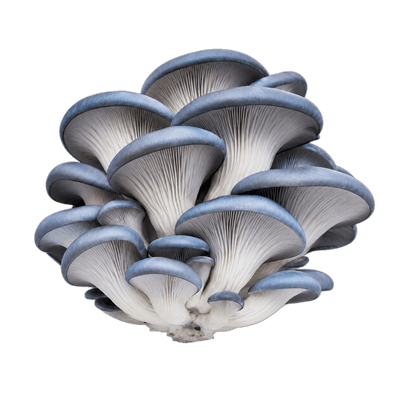
Blue Oyster is the strongest fit for cooler fruiting rooms and develops blue-gray caps under suitable conditions.
Compare Blue, Pearl, Pink and Yellow Oyster mushroom liquid cultures by temperature range and growing conditions. Use our beginner guide to choose between cool- and warm-weather varieties, or grow all four with the Oyster 4-Pack.
Oyster mushrooms share vigorous growth and high fresh-air needs, but the four cultures in this collection are not interchangeable. Temperature is the most useful first filter. Blue Oyster is the coolest-weather choice, Pearl Oyster covers a broad moderate range, and Pink and Yellow Oyster perform best in warmer conditions.
All four can colonize properly prepared straw or supplemented hardwood quickly. During fruiting, inadequate fresh air commonly produces long stems and undersized caps. Stable humidity supports healthy clusters, but constant wet surfaces and stagnant air increase problems. Plan the fruiting space before inoculation, especially indoors where mature Oyster mushrooms can release substantial spores.
Choose the species that fits the temperature you can maintain instead of forcing a warm-weather strain into a cold room or a cool-weather strain into summer conditions. Each 10cc syringe contains lab-prepared live mycelium from a verified parent culture.
Blue Oyster is the strongest fit for cooler fruiting rooms and develops blue-gray caps under suitable conditions.
Pearl Oyster is a versatile choice for growers who want the classic pale Oyster form across moderate temperatures.
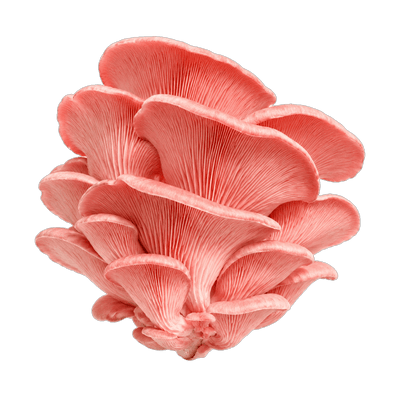
Pink and Yellow Oyster prefer warmer fruiting temperatures and show their strongest coloration under appropriate conditions.
Blue and Pearl Oyster are common first choices because their methods are well documented and they perform across practical cool-to-moderate ranges. Pink Oyster is equally approachable in a consistently warm space.
Only when their preferred ranges overlap. Blue Oyster and Pink Oyster have very different temperature preferences, so one room rarely provides ideal conditions for both at the same time.
The most common cause is insufficient fresh-air exchange and elevated carbon dioxide. Increase fresh air while preserving adequate humidity.
Properly prepared straw and supplemented hardwood are common choices. Hydration, pasteurization or sterilization, and supplementation should match the chosen cultivation system.